
Facebook and Instagram are being sued by users who claim that the platforms' algorithms harm young people's mental health, leading to addiction, body image issues, and depression.
To file a lawsuit against Facebook for mental health impacts, individuals should gather evidence, seek experienced lawyers in social media harm cases, and stay engaged throughout the legal process.
Meta faces serious liability concerns, with multiple lawsuits alleging their practices contribute to a range of mental health issues in young users, including self-harm and eating disorders.
On this page, we’ll discuss what the Facebook mental health lawsuit is about, the current status of the Facebook mental health lawsuit, who qualifies to file a Facebook mental health lawsuit, and much more.
Key aspects of the Facebook mental health lawsuit include, but are not limited to:
If you or someone you love has struggled with mental health challenges related to Facebook, you may qualify to file a claim.
Contact TruLawsuit Info using the chat on this page to find out if you qualify to seek compensation in the Facebook mental health lawsuit today.
The intersection of social media usage and teen mental health has become a focal point for research and legal scrutiny, with a multitude of studies linking platforms like Facebook to negative psychological outcomes in young people.
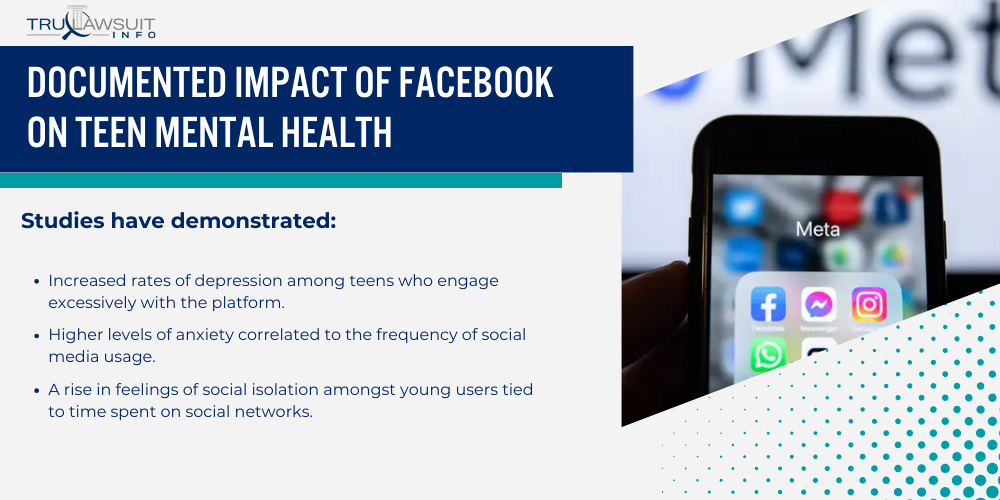
Facebook has been scrutinized for its potential impact on the mental health of its younger audience.
Studies have demonstrated:
The Attorney General James and Multistate Coalition have taken legal action based on such findings.
Young people today are facing unprecedented challenges to their mental well-being.
From social media pressures to a constantly connected world, their developing minds are bombarded with information and experiences that can be overwhelming.
The broader societal implications of the youth mental health crisis are vast, with different stakeholders expressing grave concerns:
The bipartisan coalition of attorneys general’s lawsuits highlight these societal challenges and stress the urgency of addressing the pervasive mental health crisis.
School districts and parents play a critical role in mitigating the effects of social media on teen girls and boys.
They focus on:
This combined approach is essential in creating a support system for young people in addition to legal actions like those initiated by the California Attorney General Bonta.
Facebook has been scrutinized for its design elements that potentially foster social media addiction, particularly among teens.
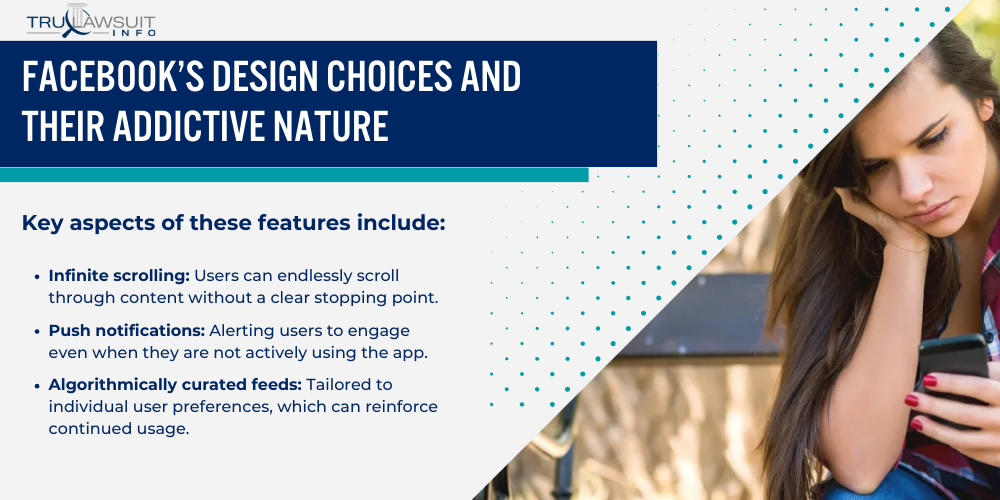
Let’s discuss how design and functionality contribute to excessive use, compare Facebook with other platforms, and address the need for age-appropriate standards in content regulation.
Facebook, along with some other social media platforms, has implemented features that are designed to capture and retain user attention.
Key aspects of these features include:
These functionalities keep users engaged, with corresponding implications for social media addiction.
Compared to other social media platforms, Facebook has often been at the forefront in terms of developing addictive features.
Here’s how it stacks up:
While practices largely overlap across platforms, the extent to which each contributes to excessive social media use varies.
The push for age-appropriate standards in content and usage arises from concerns over Facebook’s effect on young users.
Notable approaches include:
It is recognized that platforms must be proactive in addressing the potential for addiction, particularly as it concerns younger demographics.
The Facebook Mental Health Lawsuit has cast a spotlight on the urgent ethical issues surrounding social media’s impact on users, particularly the youth.
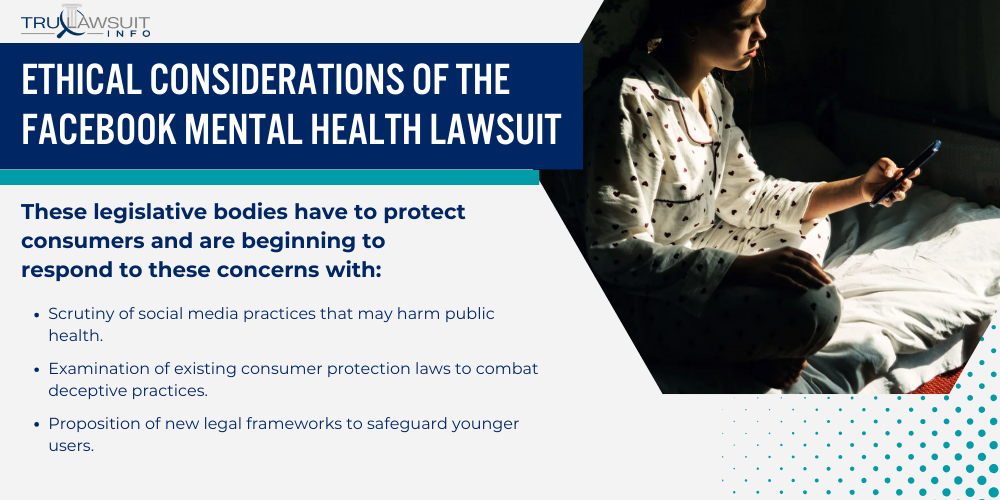
This scrutiny has ethical implications tied to legislation, consumer advocacy, and ongoing legal challenges.
Federal and state legislation plays a pivotal role in addressing potential public health hazards posed by social media.
These legislative bodies have to protect consumers and are beginning to respond to these concerns with:
Attorneys general from various states have initiated legal action, emphasizing the need for robust legal intervention to protect consumers.
For example, the California Attorney General has been a leading figure in the legal pursuit against Meta for its operating procedures.
Consumer advocacy groups have critiqued Meta for not doing enough to protect users, especially the younger demographic.
These organizations argue that:
Protection of consumers’ well-being is paramount, and legal actions in federal court underscore this position.
For example, the Northern District of California has become a significant battleground for Facebook mental health lawsuits.
The ethical implications of suing Meta over allegations of harm to youth mental health have highlighted the pattern of ongoing legal actions against tech companies.
Salient points to consider are:
The engagement of numerous attorneys general in the lawsuit signifies a collective response to protect the public interest.
Notably, the consolidation of these actions suggests a common recognition of possible unethical practices affecting mental health.
The ongoing legal battle involving Meta over the negative mental health effects of their social media platforms on young users could set a precedent for how digital companies manage user experience and accountability.
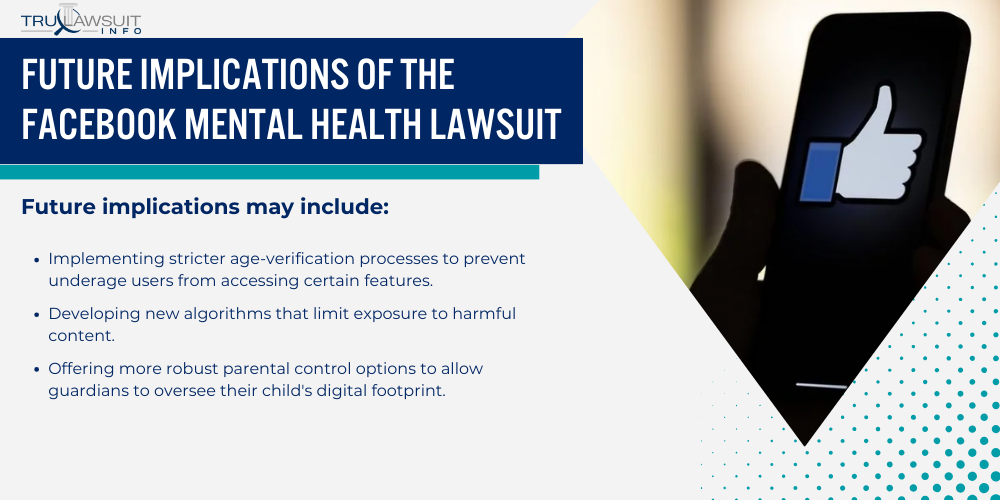
Digital platforms might be compelled to introduce new safety measures designed to protect young people online.
This could include:
The lawsuit emphasizes the need for companies to be accountable for their impact on users’ well-being.
Potential outcomes may involve:
In the wake of concerns about the impact of social media on mental health, particularly among teens, Metas platforms have an opportunity to prioritize user well-being.
This could involve establishing dedicated help centers for users struggling with content and providing teens with access to mental health resources.
Metas may need to direct more resources into support systems:
These changes, emanating from the lawsuit, could fundamentally alter how social media entities engage with their youngest user base.
They strive to ensure the protection of users and create a more transparent online space that supports healthy digital habits.
Attorneys General from multiple states have taken legal action against Meta, Facebook’s parent company.
This litigation includes claims of deliberately addictive features on platforms such as Instagram.
For more details, readers can review the information laid out by Attorney General Kris Mayes.
The exact compensation figures in the lawsuit have not been disclosed publicly.
However, they are likely to be substantial owing to the severity of the allegations and the number of states involved.
The lawsuits claim that social media companies prioritize user engagement over user well-being, achieved through addictive algorithms and content, exacerbating mental health problems, particularly among young people.
For instance, the Attorney General of Oklahoma states similar grievances in the filing.
Individuals suffering from depression as a result of using Facebook can potentially pursue legal action.
Seeking the counsel of a legal expert is advisable to explore this option.
The lawsuits claim that Meta prioritizes user engagement over user well-being in its design choices, leading to mental health issues, especially among young people.
This is a bipartisan effort involving multiple states, including the Michigan Attorney General’s office.
While the core accusations against social media companies focus on their alleged negative impact on youth mental health, the lawsuits themselves may differ based on the specific laws of each state.
This can lead to variations in how Facebook mental health lawsuits are filed and argued, even though the underlying claims may be similar.

Attorney Jessie Paluch, founder of TruLawsuit Info, has over 25 years of experience as a personal injury and mass tort attorney, and previously worked as an international tax attorney at Deloitte. Jessie collaborates with attorneys nationwide — enabling her to share reliable, up-to-date legal information with our readers.
This article has been written and reviewed for legal accuracy and clarity by the team of writers and legal experts at TruLawsuit Info and is as accurate as possible. This content should not be taken as legal advice from an attorney. If you would like to learn more about our owner and experienced injury lawyer, Jessie Paluch, you can do so here.
TruLawsuit Info does everything possible to make sure the information in this article is up to date and accurate. If you need specific legal advice about your case, contact our team by using the chat on the bottom of this page. This article should not be taken as advice from an attorney.
Here, at Tru Lawsuit Info, we’re committed to helping victims get the justice they deserve.
To do this, we actively work to connect them with attorneys who are experts in litigating cases similar to theirs.
Tru Lawsuit Info is a reliable source of information about issues that may affect your health and safety, such as faulty products, data breaches, and environmental hazards.
Our team of experienced writers collaborates with medical professionals, lawyers, and advocates to produce informative articles, guides, and other resources that raise awareness of these topics.
Our thorough research provides consumers with access to reliable information and updates on lawsuits happening around the country. We also can connect consumers with attorneys if they need assistance.
Here, at Tru Lawsuit Info, we’re committed to helping victims get the justice they deserve.
To do this, we actively work to connect them with attorneys who are experts in litigating cases similar to theirs.