
People helped
4,000+

Instagram Addiction Lawsuits: Finding Legal Representation

Key Takeaways

  • Victims looking for legal representation in Instagram addiction lawsuits can start by searching for law firms that specialize in technology and social media harm.

  • Free consultations are available from many attorneys, providing an opportunity to understand rights and potential lawsuit viability without any initial financial commitment.

  • By checking lawyers' track records, reading client testimonials, and ensuring no conflict of interest, users can find the right counsel to guide them through their cases against major tech companies.

Overview of Instagram Addiction Lawsuits

Question: Where Can Users Find Legal Representation for Instagram Addiction Lawsuits?

Answer: Individuals seeking legal representation for the Instagram addiction lawsuits can find assistance at TruLawsuit Info. We have experience in addressing personal injury claims surrounding social media addiction and its legal implications.

On this page, we’ll discuss this question in further depth, including an over of the Instagram addiction lawsuits, potential damages linked to Instagram addiction, and much more.

Instagram Addiction Lawsuits Finding Legal Representation

Instagram has recently been hit with multiple lawsuits alleging that the app is intentionally designed to be addictive and harmful to users’ mental health.

The lawsuits center on a number of specific practices:

  • Algorithmic Engagement: The use of algorithms that curate content to keep users engaged for longer periods, potentially leading to addictive behavior.
  • Feedback Loops: Features like “likes,” comments, and notifications create a cycle of interaction that can cause users to spend excessive amounts of time on the app
  • Psychological Effects: The design and functionality of Instagram are said to exploit human psychology, particularly the desire for social validation, which can be detrimental to mental health.
  • Lack of Transparency: Plaintiffs argue that Instagram has not been forthcoming about the risks associated with its use, failing to warn users about the potential for addiction and its impact on mental health.
  • Further Implications: These allegations raise broader questions about the ethical responsibilities of social media platforms and the long-term effects of their design choices on society as a whole.

If you or a loved one have experienced mental health issues after developing a social media addiction, you may be eligible to file a lawsuit.

Contact TruLawsuit Info for a free consultation using the chat on this page for a free case evaluation to see if you qualify for potential legal action instantly

Understanding Social Media Addiction

Social media addiction grips many individuals, particularly adolescents, in a pattern of excessive and compulsive use that can overshadow other aspects of life.
This gripping phenomenon manifests through various signs that signal an unhealthy reliance on platforms like Instagram, affecting users’ daily routines and overall well-being.

The connection to Adolescents

Teens are at a higher risk for social media addiction.

Their brains are still growing, making them more likely to get hooked.

Many spend hours on platforms like Instagram and Facebook every day.

This need to stay connected can hurt their health.

Young people often compare themselves to others online.

They might feel bad about their bodies or lives because of what they see on social media.

These comparisons can lead to mental health problems like low self-esteem or depression.

Lawyers are stepping in to help those harmed by these platforms.

If someone got addicted before turning 21, they might have a case against the social media company that owns the platform.

For example, Meta’s CEO has said sorry for how Facebook affected users’ well-being.

Now, legal experts from TruLaw want to make sure families get justice if they’ve been hurt by social media use before adulthood.

Signs of Social Media Addiction

Social media addiction impacts a growing number of young individuals, negatively influencing their well-being and overall health.

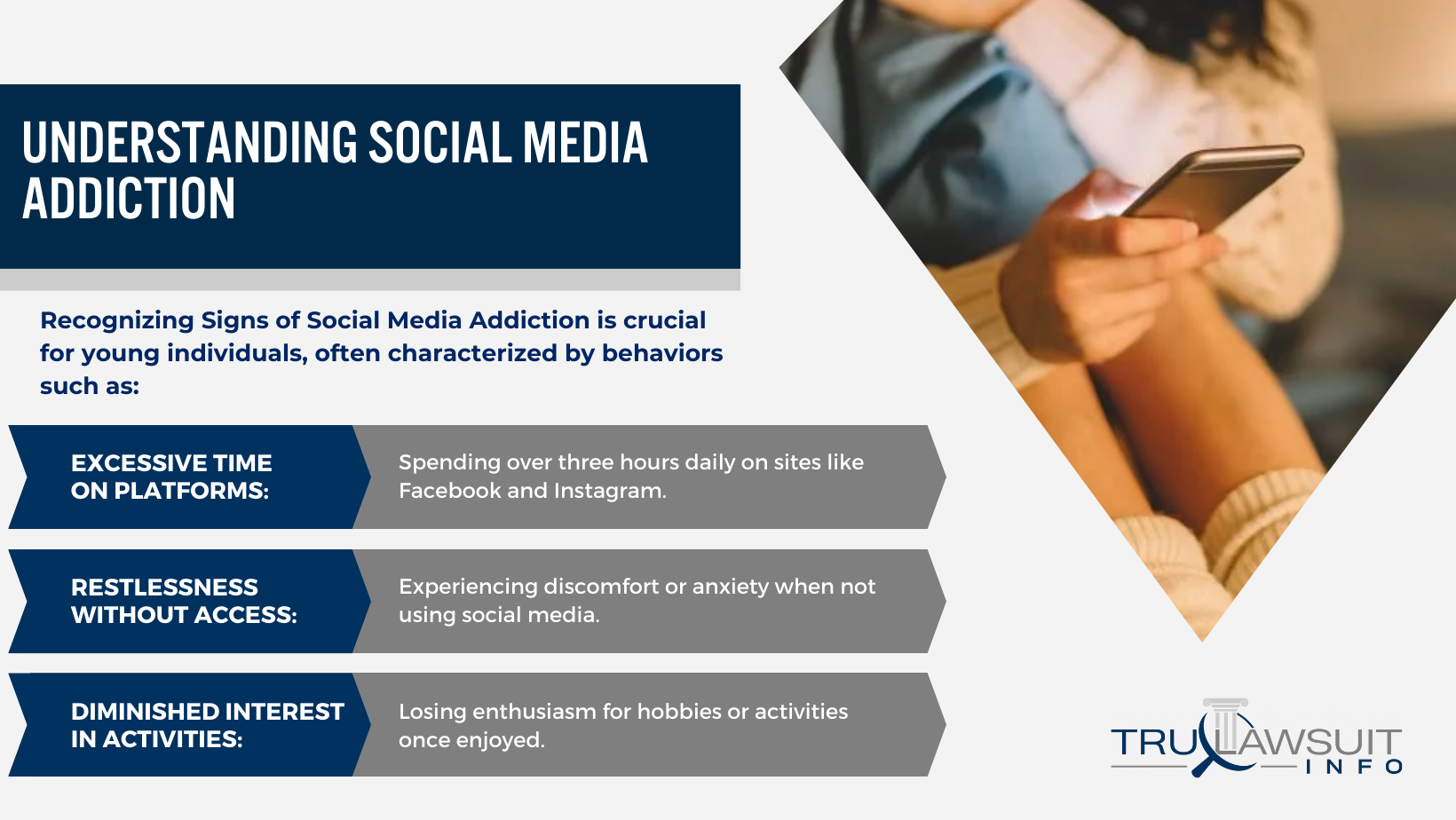
Recognizing Signs of Social Media Addiction is crucial for young individuals, often characterized by behaviors such as:

  • Excessive Time on Platforms: Spending over three hours daily on sites like Facebook and Instagram.
  • Restlessness Without Access: Experiencing discomfort or anxiety when not using social media.
  • Diminished Interest in Other Activities: Losing enthusiasm for hobbies or activities once enjoyed.
  • Constant Need to Check Updates: Feeling a compulsion to constantly look at notifications or new posts.
  • Neglecting Responsibilities: Allowing social media to interfere with academic or work commitments.
  • Disrupted Sleep and Eating Habits: Poor sleep or eating patterns due to late-night browsing.
  • Social Conflicts: Encountering arguments with family or friends about social media usage.

If you or a loved one have experienced mental health issues after developing a social media addiction, you may be eligible to file a lawsuit.

Contact TruLawsuit Info for a free consultation using the chat on this page for a free case evaluation to see if you qualify for potential legal action instantly

The Impact of Social Media Addiction on Teens

The surge in social media addiction among adolescents has cast a spotlight on its profound influence on youth mental and emotional well-being.

When teens become entangled in the digital web of Instagram, the fallout often extends beyond their screens, permeating their real-life experiences with serious consequences for their health and development.

Mental Health Effects

Social media addiction hits teens hard in the mental health department.

Hours spent scrolling through Instagram can lead to depression, anxiety, and lower self-esteem.

Teens compare themselves to others and feel they don’t measure up.

This constant social comparison can make them believe their lives aren’t good enough.

Many young users face serious issues like eating disorders and suicidal thoughts because of social media pressure.

These platforms exploit human psychology, keeping teens hooked and sometimes leading to self-destructive behavior like self-harm or suicide attempts.

It’s a real crisis that leaves deep psychological scars on our youth.

The link between Social Media and Self-harm

Teens spend hours scrolling through feeds, looking at pictures, and reading comments.

This can lead to feeling bad about their bodies or lives.

They see other people with “perfect” bodies or “amazing” lives and feel they don’t measure up.

When these feelings grow, some teens turn to self-harm to cope with the pain.

Self-harm is not just cutting—it includes any way a person hurts themselves on purpose.

For some kids, it’s a way to handle emotions they can’t talk about.

Too much time on platforms like Instagram may make these feelings worse.

Teens affected might start thinking about suicide or even try it.

Parents often don’t know what’s happening online or how it affects their kids’ minds.

Lawyers say that companies like Meta Platforms knew about these dangers but didn’t warn users enough.

They are taking cases from young people hurt by social media before turning 21 years old—especially if they were addicted and harmed themselves because of it.

Legal Aspects of Social Media Addiction

With the rise in social media addiction claims, there has been an uptick in lawsuits targeting these digital giants — but what does this mean for those affected?

As we delve into the legality surrounding tech companies and their responsibilities, we uncover the evolving landscape where users’ well-being intersects with corporate accountability.

Lawsuits Against Social Media Companies

People are suing social media giants like Facebook and Instagram.

They say these platforms got them hooked before they turned 21, causing serious injuries.

Courts are filled with such cases.

For example, 399 lawsuits about social media addiction pile up in California’s Northern District court.

The lawsuits make big claims against the tech companies.

They argue that social media sites were made to be too engaging, especially for young people.

Companies didn’t warn users or their parents about how addictive their platforms could be, leading to injuries, the lawsuits say.

Class Action MDL for Instagram Addiction Lawsuits

Courts have grouped hundreds of social media addiction cases into a class action MDL in Northern California.

This move streamlines the process for everyone involved.

In these lawsuits, people claim that Instagram led to mental health issues like anxiety and depression, especially among teens.

Judge Yvonne Gonzalez Rogers hinted she might not let social media companies off easy.

They wanted a quick win and to block expert witnesses from the plaintiffs.

But the judge’s stance suggests those experts might get heard after all.

This could be crucial for families saying Instagram hurt their kids’ mental well-being.

The Role of Legal Immunity in Social Media Lawsuits

Social media companies often say they can’t be sued thanks to a law, 47 U.S.C. § 230.

This law gives them a shield against many legal claims for what users post or the results of those posts.

But, when it comes to social media addiction lawsuits, this shield might not work.

The reason is that these suits blame harm on the platforms’ own tech and ways of doing things.

A big judge, Yvonne Gonzalez Rogers, hints she might say no if social media firms ask to end such cases early.

They also want to block experts who could link the platforms’ tech to users’ harm.

Her stance shows judges are taking these addiction claims seriously.

Teens hurt by social media have lawyers standing up for them in court.

These lawyers fight claims that apps like Instagram cause health problems because they’re made addictive on purpose.

With evidence from insider stories and research studies, strong cases are forming against the social networks for not protecting young users well enough.

Studies Linking Social Media to Health Conditions

Empirical research has identified a correlation between social media use and various health conditions, particularly among adolescents.
Major studies have unearthed troubling connections—such as those linking heavy Instagram usage with rising incidents of depression and anxiety in teen girls—highlighting the platform’s potential role in exacerbating mental health issues.

Adverse Health Events

Social media can lead to serious health problems.

Teens who use Instagram might develop body image issues or low self-esteem.

These struggles are not just feelings; they can turn into actions that harm the body and mind.

Some teens have even attempted suicide or engaged in self-harm due to social media stress.

Lawyers see a connection between social media use and health dangers.

They look for cases where young people under 21 got addicted and then hurt themselves physically, like with eating disorders or worse.

With hundreds of related lawsuits pending in California, it’s clear this problem is big and widespread.

Major Injuries in a Social Media Lawsuit

Instagram addiction can lead to serious injuries. Lawsuits highlight the damage done to young individuals.

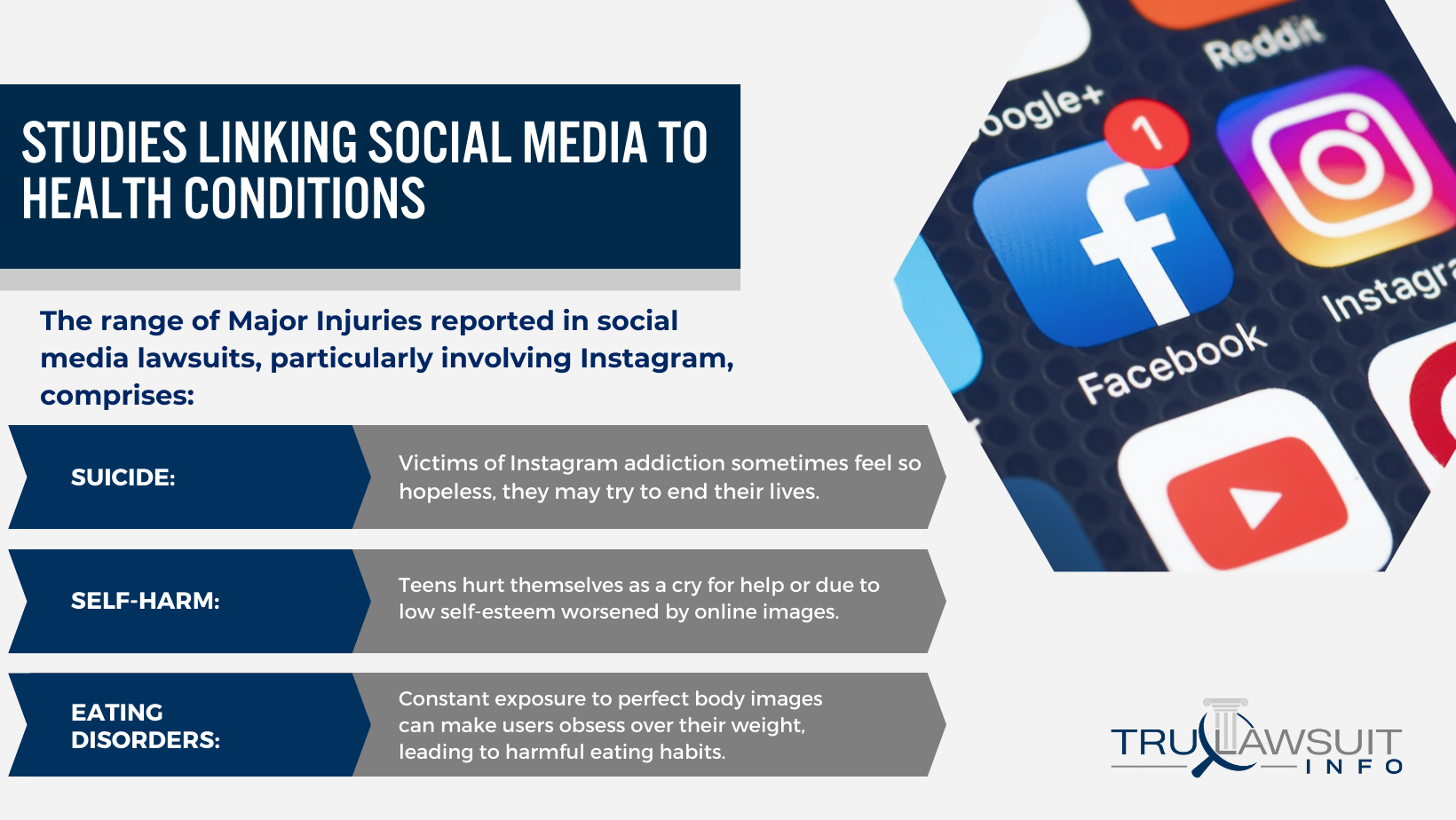
The range of Major Injuries reported in social media lawsuits, particularly involving Instagram, comprises:

  • Suicide: Victims of Instagram addiction sometimes feel so hopeless, they may try to end their lives. This is often linked to the pressure of social media.
  • Self-harm: Teens hurt themselves as a cry for help or due to low self-esteem worsened by online images.
  • Eating disorders: Constant exposure to perfect body images can make users obsess over their weight, leading to harmful eating habits.
  • Sleep disorders: Too much screen time, especially at night, disrupts sleep patterns and leads to issues like insomnia.
  • Anxiety: The need for likes and followers can cause intense stress and anxiety in users who worry about their online presence.
  • Depression: Social media often shows an unrealistic life, making teens feel unhappy with their own lives.
  • Body dysmorphia: Edited selfies set impossible beauty standards that make viewers dissatisfied with their own appearance.

Finding Legal Representation for Instagram Addiction Lawsuits

If you suspect that Instagram addiction has adversely affected you or your loved ones, securing the right legal support is crucial.
Opting for a law firm like TruLaw ensures specialized guidance for those pursuing social media harm lawsuits—where expertise in digital law intersects with a commitment to clients’ well-being.

Who Can File a Social Media Harm Lawsuit?

Social media harm lawsuits are a new area of law.

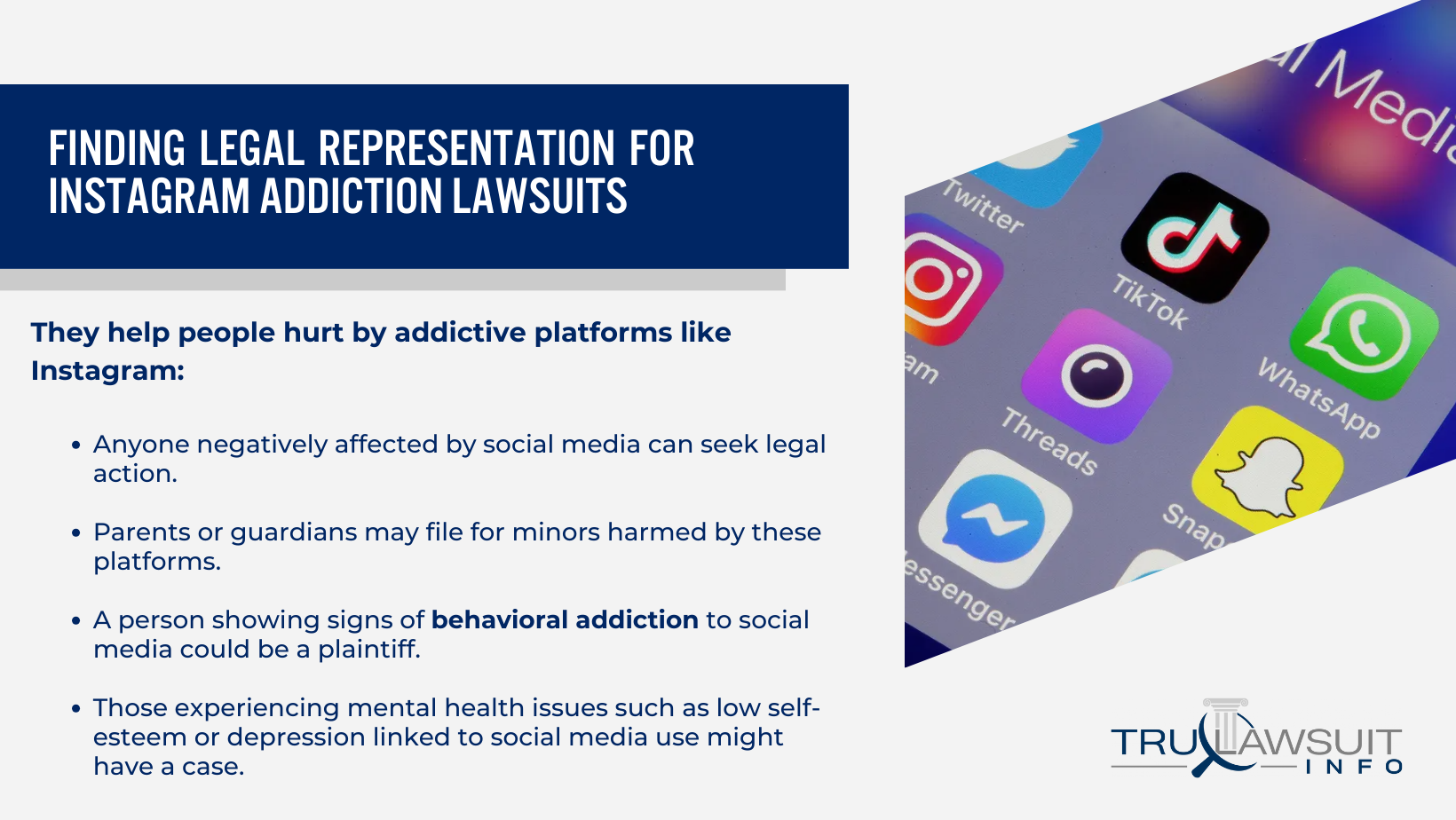
They help people hurt by addictive platforms like Instagram.

  • Anyone negatively affected by social media can seek legal action.
  • Parents or guardians may file for minors harmed by these platforms.
  • A person showing signs of behavioral addiction to social media could be a plaintiff.
  • Those experiencing mental health issues such as low self-esteem or depression linked to social media use might have a case.
  • Individuals engaging in self – harm or having suicidal ideation connected to social media may pursue a lawsuit.
  • Teens and young adults facing psychological harm from intense platform usage are potential claimants.
  • Schools and school districts noticing impacts on the well – being of their students could consider legal steps.
  • People who have internal research showing how platforms led to their negative experiences stand a chance in court.
  • Victims feeling they were lured into using the platform more through engagement – based ranking may seek justice.

What to Look for in Social Media Attorneys

Finding the right lawyer is key when facing issues like Instagram addiction. You want a pro who knows social media law inside out.

In choosing Social Media Attorneys, focus on aspects like experience with teen cases, strategy against legal immunity, and resources for investigation:

  • Experience with Personal Injury and Mass Tort: Choose a lawyer who has tackled cases similar to yours, especially in the personal injury or mass tort area.
  • Knowledge of Social Media Impact: A good attorney understands how platforms can affect mental health and self-esteem.
  • Success with Class Action Lawsuits: An attorney with a track record in class actions can handle the complexities of social media cases.
  • Familiarity with Federal Legislation: Look for lawyers who are up-to-date with laws that govern social media and user engagement.
  • Understanding of Psychological Harm: Your lawyer should know about the link between social media use and psychological issues.
  • Proven Record With Teen Cases: If you’re a teen or filing for one, find someone experienced with minor users’ unique legal needs.
  • Strategy for Fighting Legal Immunity: Since social media companies have certain protections, your attorney must be skilled at challenging these defenses.
  • Resources to Investigate Claims: Solid legal teams have the tools to dig deep into your case and collect evidence.

Attorneys play a crucial role in advocating for the appropriate settlement value, taking into account the evidence and circumstances unique to each case.

With 399 pending cases in the Northern District of California, the landscape of these lawsuits is still forming.

Legal representation by firms like TruLaw is vital for individuals pursuing these cases to ensure their claims are adequately represented and compensated.

Conclusion

If you’re seeking justice for Instagram addiction’s harm, remember, help exists.

TruLaw is ready to assist young people hurt by social media before turning 21.

Check their experience in mass tort cases and past client reviews.

Reach out for a free case evaluation today.

It’s time to take a step towards healing and accountability.

Frequently Asked Questions

Published by:
Share
Picture of Jessie Paluch
Jessie Paluch

Attorney Jessie Paluch, founder of TruLawsuit Info, has over 25 years of experience as a personal injury and mass tort attorney, and previously worked as an international tax attorney at Deloitte. Jessie collaborates with attorneys nationwide — enabling her to share reliable, up-to-date legal information with our readers.

This article has been written and reviewed for legal accuracy and clarity by the team of writers and legal experts at TruLawsuit Info and is as accurate as possible. This content should not be taken as legal advice from an attorney. If you would like to learn more about our owner and experienced injury lawyer, Jessie Paluch, you can do so here.

TruLawsuit Info does everything possible to make sure the information in this article is up to date and accurate. If you need specific legal advice about your case, contact our team by using the chat on the bottom of this page. This article should not be taken as advice from an attorney.

You can learn more about the Social Media Harm Lawsuit by visiting any of our pages listed below:
All
FAQs
Injuries & Conditions
Legal Help
Other Resources
Settlements & Compensation
You can learn more about the Social Media Harm Lawsuit below:
Addressing Mental Health Consequences in Social Media Harm Lawsuits
Algorithms in Social Media Addiction Lawsuits
Benefits of Deleting Social Media for Mental Health
Comprehensive Guide to the Social Media Harm Lawsuit
Do I Qualify For The Social Media Mental Health Lawsuit?
Does User Responsibility Affect Social Media Harm Lawsuits?
Economic Cost of Social Media Addiction: Lawyers Perspective
Facebook Defamation Cases: What You Should Know
Facebook Meta Lawsuit: What to Consider When Filing
FAQ: Is there a Class Action Instagram Lawsuit?
FAQ: Is there a Meta Class Action Lawsuit?
FAQ: What are Legal Grounds for Filing an Instagram Lawsuit?
FAQ: What Are the Causes for Social Media Harm Lawsuits?
Filing a Social Media Mental Health Lawsuit: Steps and Considerations
Hiring a Social Media Attorney: What to Look For
How Are Users and Platforms Involved in Instagram Lawsuit?
How Can A Social Media Attorney Protect Your Online Rights?
How Can I Join the Instagram Class Action Lawsuit?
How Do You Join the TikTok Mental Health Lawsuit?
How Social Media Platforms Influence Addiction & Harmful Behaviors
How Social Media Political Manipulation Works
How The Legal Process Unfolds In An Instagram Addiction Lawsuit?
How To Build A Strong Case For A Facebook Mental Health Lawsuit
How to Combat Social Media Cyberbullying
How to File a Snapchat Lawsuit?
How To Find Legal Representation For Your TikTok Lawsuit
How To Navigate The Complexities Of A Meta Lawsuit
How to Stop Social Media Online Harassment
How to Win a Meta Lawsuit?
Impact of Social Media on Teenagers and Adolescents
Initiating a Social Media Harm Lawsuit: Legal Basics and Steps
Instagram Lawsuit: Instagram Mental Health Lawsuit Guide & Updates
International Social Media Harm Lawsuits: Global Perspective
Intersection of Social Media and Intellectual Property Law
Meta Lawsuit Guide: How to File a Meta Lawsuit in 2023
Parental Responsibility in Social Media Lawsuits
Proving Causation in a Social Media Mental Health Lawsuit
Psychological Impact of Social Media
Seeking Compensation in the Facebook Mental Health Lawsuit
Social Media Addiction: Workplace Productivity
Social Media Algorithm Manipulation Lawsuit
Social Media and Body Image: What's the Connection?
Social Media and Mental Health Issues Leading to Crisis
Social Media Harm in Teenagers
Social Media Harm Lawsuit Expert: Importance of Testimony
Social Media Harm Lawsuit Injuries
Social Media Harm Lawsuit Settlement Amounts
Social Media Harm Lawsuit: A Deep Dive into Class Action Lawsuits
Social Media Harm Lawsuit: Preventing Social Media Harm 
Social Media Harm Lawsuit: Protecting Victims and Seeking Justice
Social Media Harm Lawsuit: Statute of Limitations
Social Media Harm Lawsuit: What to Know
Social Media Influencers: Avoiding Liability
Social Media Lawsuit Cases: What You Need to Know
Social Media Lawsuit Whistleblower Says Meta Knew of Impact
Social Media Lawsuit: Youth Mental Health Crisis
Social Media Mental Harm for Teenagers and Young Adults
Social Media Mental Health Crisis: Investigating the Cause
Social Media Mental Health Lawsuit and Online Addiction: Seeking Compensation
Social Media Platform Accountability in 2024 and Beyond
Social Media Privacy Violations: Pursuing Legal Action
Social Media Seriously Harms Your Mental Health
Social Media Sleep Deprivation: Discovering a Link
Social Media Victims: Filing a Mental Harm Lawsuit
Social Media Workplace Discrimination: Legal Ramifications
Symptoms of Social Media Addiction: What You Need To Know
Teen Mental Health Lawsuit: Protecting Our Youth
The Ethical Responsibility of Social Media Platforms
The Future of Social Media Regulation: Lessons from Lawsuits
The Psychological Effects of Social Media on Teenagers
Understanding User Agreements in Social Media Lawsuits
What Are The Damages You Can Claim In The TikTok Mental Health Lawsuit?
What Damages Can You Pursue In A Facebook Meta Lawsuit?
What Damages Can You Seek In A Snapchat Lawsuit?
What Damages Can You Seek In An Instagram Mental Health Lawsuit?
What Does The Instagram Mental Health Lawsuit Mean For Users?
What Is The Facebook Mental Health Lawsuit?
What Is The Instagram Mental Health Lawsuit?
What Is The Snapchat Lawsuit About?
What Is The TikTok Mental Health Lawsuit?
What You Need To Know About The Meta Lawsuit
When To Pursue Legal Action For Social Media Addiction
Where To Find Legal Representation For Your Meta Lawsuit
Where To Find Legal Representation For Your Snapchat Lawsuit
Who Are the Defendants in The Social Media Harm Lawsuit?
Who Can File A TikTok Mental Health Lawsuit?
Why is the Instagram Addiction Lawsuit on the Rise?
Why Protecting Children from Social Media Harm Matters
Why We Should Not Ignore The Meta Lawsuit

Other Social Media Harm Lawsuit Resources

All
FAQs
Injuries & Conditions
Legal Help
Other Resources
Settlements & Compensation