
People helped
4,000+

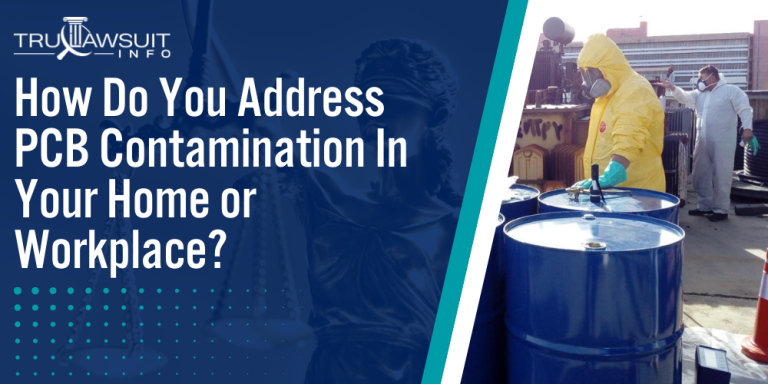
How Do You Address PCB Contamination In Your Home Or Workplace?

Key Takeaways

  • To tackle PCB contamination, thoroughly assess your environment, especially in buildings built before 1979 or near industrial areas known for PCB usage.

  • Regular inspections and proper disposal of PCB-containing materials are crucial to prevent health risks like cancer and hormone disruptions; always follow EPA guidelines for legal compliance.

  • Educating yourself and others on the dangers of PCBs encourages safer handling practices, reduces exposure risks, and promotes advocacy for environmental protection against these toxic substances.

Overview of PCB Contamination In Your Home or Workplace

Question: How do you address PCB contamination in your home or workplace?

Answer: To address PCB contamination in your home or workplace, a comprehensive approach is required.

This approach includes developing an abatement strategy, conducting removal and abatement activities, handling, storing, and disposing of wastes, and maintaining proper documentation.

On this page, we’ll discuss this question in further depth, an overview of PCB contamination, methods of treating PCB exposure, safety measures to avoid PCB-contaminated areas, and much more.

How Do You Address PCB Contamination In Your Home or Workplace

Intro to Avoiding PCB Contamination

Tools and methods that minimize dust and heat should be selected, and protective measures should be in place to protect workers and building users from PCB contamination.

Personal protective equipment, worker hygiene practices, and proper disposal of contaminated materials can save lives.

If you or a loved one has experienced adverse health conditions after being exposed to PCB chemicals, you may be eligible to pursue compensation.

Contact TruLawsuit Info today using the chat on this page to receive an instant case evaluation.

Environmental and Health Impact of PCB Exposure

Polychlorinated biphenyls (PCBs) are recognized for their persistent nature and potential to cause significant health effects.
Environmental and Health Impact of PCB Exposure

When addressing PCB contamination, it’s essential to understand its environmental reach and the myriad adverse health effects it can cause in humans and wildlife.

Health Effects of PCB Exposure

Exposure to PCBs has been associated with various health effects, mainly since they are considered probable human carcinogens.

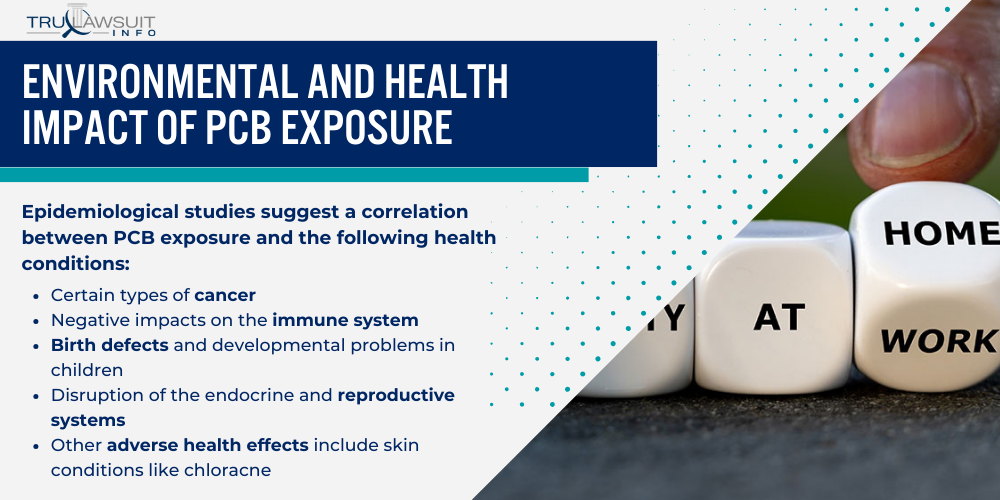
Epidemiological studies suggest a correlation between PCB exposure and the following health conditions:

  • Certain types of cancer
  • Negative impacts on the immune system
  • Birth defects and developmental problems in children
  • Disruption of the endocrine and reproductive systems
  • Other adverse health effects include skin conditions like chloracne

Environmental Spread and Persistence

PCBs accumulate in the environment due to their chemical stability and persistent nature.

The following points detail how PCBs persist and are distributed through different environmental mediums:

  1. PCBs can be found in soil and sediments, where they bind tightly and remain for decades.
  2. They tend to accumulate in the fatty tissues of living organisms, leading to increased PCB levels higher up the food chain.
  3. PCBs can be released into the air from improper disposal or breakdown of materials containing PCBs, contributing to their long-range transport.
  4. Water sources can also become contaminated through industrial discharges or leaching from waste sites.

Impact on Wildlife and Ecosystems

The ecological consequences of PCB toxicity are profound, as these toxic compounds significantly impact wildlife and ecosystems.

They are persistent organic pollutants that can lead to the following effects on various forms of wildlife:

  • Disruptions in the reproductive cycles and behaviors of fish and mammals
  • Immune system suppression, leading to increased susceptibility to diseases
  • PCBs affect the growth and survival rates of laboratory animals
  • Predatory birds and mammals exhibit birth defects and reproductive issues due to high PCB levels in their diets

Sources of PCB Contamination: What You Need To Know

Identifying the sources of PCB contamination is critical for implementing effective remediation strategies in homes and workplaces.
Sources of PCB Contamination_ What You Need To Know

Industrial Sources

Industrial sites have historically contributed to PCB contamination due to the widespread manufacturing process of electrical equipment such as PCB capacitors and PCB transformers.

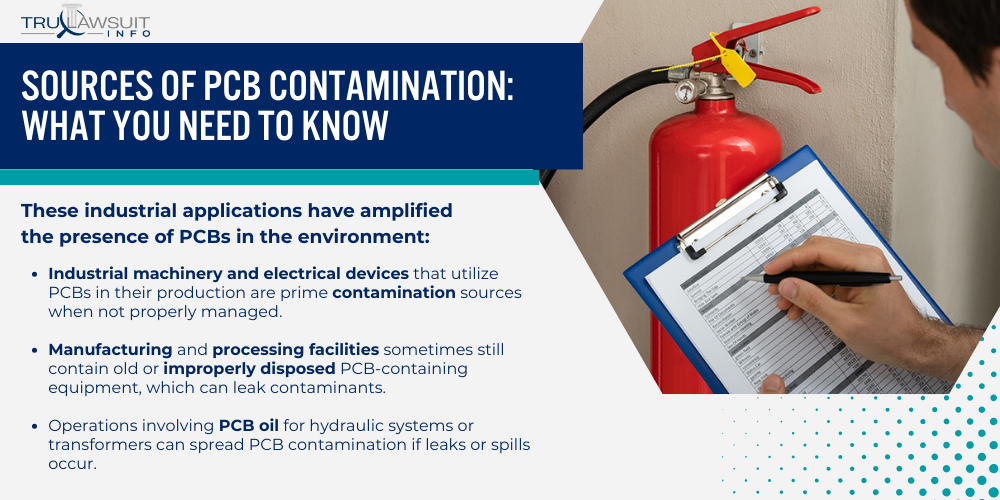
These industrial applications have amplified the presence of PCBs in the environment:

  • Industrial machinery and electrical devices that utilize PCBs in their production are prime contamination sources when not properly managed.
  • Manufacturing and processing facilities sometimes still contain old or improperly disposed PCB-containing equipment, which can leak contaminants.
  • Operations involving PCB oil for hydraulic systems or transformers can spread PCB contamination if leaks or spills occur.
  • If not cleaned up appropriately, decommissioned industrial sites can remain dormant hazardous waste sites, impacting surrounding areas.

Improper Waste Disposal

Improper disposal practices can lead to PCBs entering the environment, with improper disposal significantly impacting both indoor and outdoor settings.

Here are examples of how PCBs can infiltrate the environment due to inadequate waste management practices:

  • Landfills not designed for hazardous waste may house materials containing PCBs, leading to leachate that contaminates groundwater.
  • Incinerating PCB-containing materials without proper controls can release PCBs into the air.
  • Disposing of fluorescent light ballasts and lighting fixtures containing PCBs alongside regular waste contributes to contamination.
  • Waste from decommissioned electrical equipment like capacitors and transformers, if not handled as PCB waste, can be a persistent contaminant source.

PCBs in Consumer Products

PCBs are present in certain consumer products, contributing to indoor contamination if these items release PCBs into the home or workplace environment.

Concerning PCBs in consumer products, here are ways they can pose risks:

  • Older fluorescent lighting fixtures and ballasts may consist of PCBs that can leak, particularly if they become damaged.
  • Some specialized paints and surface coatings used in older constructions may contain PCB residuals.
  • Appliances and electronics produced before PCBs were regulated may still contain these contaminants.
  • Certain PCB-contaminated fish and contaminated food from polluted environments can inadvertently become household items if they are not properly identified and avoided.

These contamination sources are incredibly problematic without rigorous controls and regulations like those established by the Environmental Protection Agency (EPA).

PCB Contamination Assessment: 2024 Update

With advancements in technology and updated health regulations, assessing PCB contamination remains a critical step for ensuring indoor environmental quality in homes and workplaces.
PCB Contamination Assessment_ 2024 Update

Identifying PCB Presence

To reliably detect the presence of PCBs, it is essential to understand the sources, which often include old electrical equipment, building materials, and caulk.

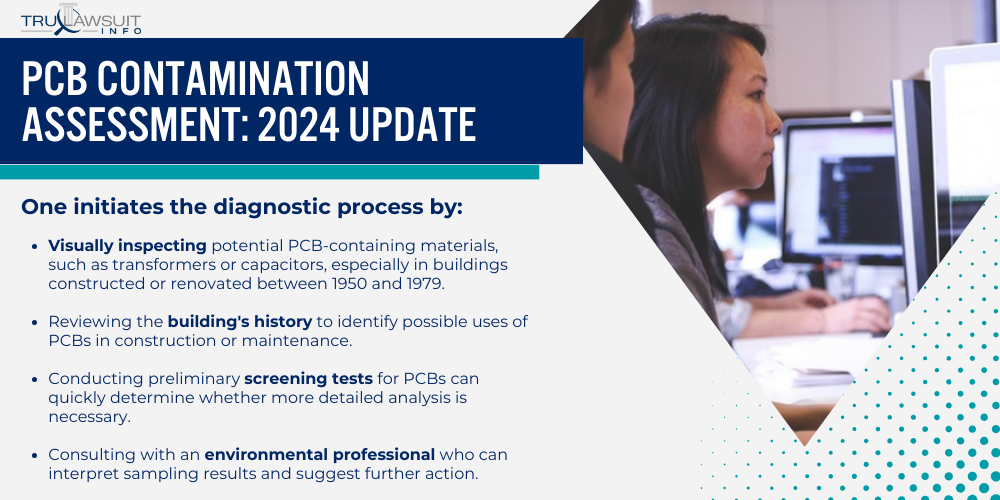
One initiates the diagnostic process by:

  1. Visually inspecting potential PCB-containing materials, such as transformers or capacitors, especially in buildings constructed or renovated between 1950 and 1979.
  2. Reviewing the building’s history to identify possible uses of PCBs in construction or maintenance.
  3. Conducting preliminary screening tests for PCBs can quickly determine whether more detailed analysis is necessary.
  4. Consulting with an environmental professional who can interpret sampling results and suggest further action.

Measuring PCB Concentrations

To determine the PCB concentrations in an indoor environment, accurate measurement is critical.

A detailed approach includes:

  • Collecting air, dust, and surface samples in various parts of the building to determine current exposure levels.
  • Sending these samples to a laboratory capable of analyzing PCB congeners to establish a comprehensive contaminant profile.
  • Utilizing advanced techniques such as gas chromatography paired with mass spectrometry for precise quantification.
  • Comparing the results against guidelines from the Environmental Protection Agency (EPA) to identify any elevated PCB levels.

Health and Safety Regulations

The regulatory framework governing PCB exposures is complex, involving both federal and state agencies.

Effective compliance with health and safety regulations involves:

  • Familiarize oneself with the EPA’s guidelines regarding permissible PCB levels in indoor environments.
  • Understanding the role of the International Agency for Research on Cancer, which classifies PCBs as a Group 1 carcinogen, underpinning the need for stringent control measures.
  • Keeping abreast of regulations by the Department of Health and Human Services for workplace safety and public health.
  • Implementing a plan for medical tests if serum PCB levels are suspected to exceed safety thresholds.

Remediation and Management of PCB Contamination

Addressing PCB contamination requires meticulous planning and execution to ensure the safety of individuals and the protection of the environment.
Remediation and Management of PCB Contamination

The approach must involve stringent removal and cleanup procedures, robust risk management strategies, and responsible PCB disposal practices for materials tainted with PCBs.

Removal and Cleanup Procedures

Addressing PCB contamination requires a methodical and thorough approach to ensure environments are safely restored to non-hazardous conditions.

The steps outlined below form the backbone of effective PCB remediation, safeguarding public health and the environment.

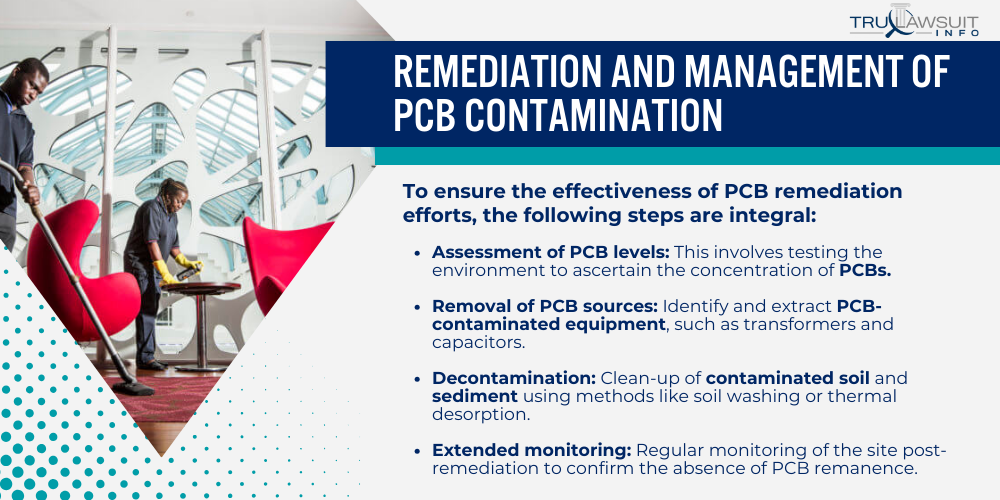
To ensure the effectiveness of PCB remediation efforts, the following steps are integral:

  1. Assessment of PCB levels: This involves testing the environment to ascertain the concentration of PCBs.
  2. Removal of PCB sources: Identify and extract PCB-contaminated equipment, such as transformers and capacitors.
  3. Decontamination: Clean-up of contaminated soil and sediment using methods like soil washing or thermal desorption.
  4. Extended monitoring: Regular monitoring of the site post-remediation to confirm the absence of PCB remanence.

Risk Management Strategies

Effective management of PCB-related risks is crucial to protecting both environmental and human health during the cleanup process.

These strategies aim to minimize exposure and ensure that remediation efforts proceed safely and efficiently.

To manage the risks associated with PCB contamination, one must:

  • Establish a perimeter around the contaminated area to control access and prevent further spread.
  • Implement health and safety protocols for workers involved in clean-up operations.
  • Regularly update the contingency plans that address potential PCB exposure incidents.
  • Comply with the protocols for managing hazardous waste sites set forth by the Environmental Protection Agency (EPA).

Disposal of PCB Contaminated Materials

The proper disposal of PCB-contaminated materials is a critical component of environmental protection efforts, requiring strict adherence to established procedures.

These guidelines are designed to ensure safe handling and prevent further environmental contamination.

When disposing of materials containing PCBs, adhere to the following guidelines:

  1. Segregation of waste: Separate PCB waste from other types of waste to avoid cross-contamination.
  2. Use of EPA-approved facilities: Disposal must occur at sites sanctioned by the EPA capable of handling PCB waste.
  3. Record-keeping: Maintain detailed records of the disposal process for regulatory compliance and future reference.
  4. Transporting materials: Transport PCB-contaminated materials using approved containers and under secure conditions.

Preventing Future PCB Contamination

Implementing stringent safe handling practices, adhering to regulatory measures, and fostering community awareness and action are essential to effectively safeguarding against future PCB contamination.
Preventing Future PCB Contamination

These steps are crucial when dealing with potential PCB exposure in homes or workplaces, especially when commercial PCB mixtures have historically been used in products such as hydraulic fluids and electrical transformers.

Safe Handling Practices

PCB-exposed workers must be diligent in handling materials potentially contaminated with PCBs.

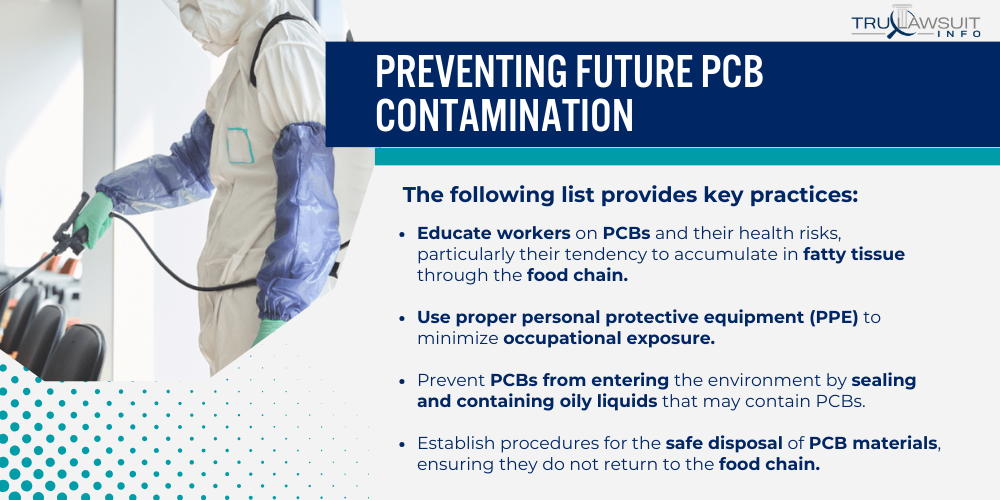
The following list provides key practices:

  • Educate workers on PCBs and their health risks, particularly their tendency to accumulate in fatty tissue through the food chain.
  • Use proper personal protective equipment (PPE) to minimize occupational exposure.
  • Prevent PCBs from entering the environment by sealing and containing oily liquids that may contain PCBs.
  • Establish procedures for the safe disposal of PCB materials, ensuring they do not return to the food chain.

Regulatory Measures

Regulations are critical for managing PCB levels in various settings.

Consider the following actions driven by regulations:

  • Adherence to the guidelines for PCBs in electrical insulating properties of materials to prevent prenatal exposure and protect PCB workers.
  • Regular inspections and testing in places where PCBs were historically used or stored.
  • Strict disposal protocols for PCBs and equipment, including electrical transformers containing PCBs.
  • Mandating reporting and documentation of PCB use, storage, and disposal to regulatory bodies.

Community Awareness and Action

Community involvement is key to preventing PCB contamination.

Here are some ways communities can take action:

  • Foster public education campaigns on the dangers of eating contaminated fish and the risks of PCB exposure.
  • Promote community programs for safe disposal of electronics and other potential PCB-containing waste.
  • Advocate for legislation that requires testing of older buildings and homes for PCBs.
  • Partner with local businesses and environmental groups to monitor and address PCB issues.

Impact of PCB Contamination: Specific Groups

Polychlorinated biphenyls (PCBs) are industrial chemicals that have contaminated numerous environments, with significant impact on specific groups such as workers and vulnerable populations.
Impact of PCB Contamination_ Specific Groups

Effects on Workers

Occupational exposure to PCBs poses a significant health risk, particularly for those working in sectors where these chemicals were heavily used or are still present due to legacy contamination.

These individuals are at an elevated risk for a range of adverse health effects due to their increased likelihood of encountering these hazardous substances.

Workers in various industries may face occupational exposure to PCBs, which can have several implications:

  1. Prolonged exposure can lead to an increased risk of developing health issues related to the immune system.
  2. PCB workers, particularly those in the electrical and manufacturing sectors, often have higher levels of PCBs in their systems.
  3. There is a potential for chronic health effects, which may manifest after years of exposure.
  4. Regular monitoring and stringent occupational health measures are essential to protect workers from the long-term effects of PCBs.

Studies indicate workers exposed to PCBs in contaminated buildings face a greater health risk compared to unexposed groups.

Individuals working in such conditions require enhanced safety protocols to minimize their exposure.

Vulnerable Populations

The impact of PCB contamination can be particularly severe for vulnerable populations, who may be more susceptible to the adverse health effects associated with exposure to these chemicals.

This includes groups such as pregnant women, infants, and children, who may be exposed through various environmental and dietary pathways.

Specific groups may experience more serious consequences from PCB contamination:

  • These groups are more susceptible due to potential PCB exposure through breast milk and fish consumption.
  • Increased PCB levels in breast milk can affect the developmental and neurological health of nursing infants.
  • Fish, a major dietary staple for many, can accumulate PCBs, posing a risk for PCB-contaminated fish consumption.

Frequently Asked Questions

Published by:
Share
Picture of Jessie Paluch
Jessie Paluch

Attorney Jessie Paluch, founder of TruLawsuit Info, has over 25 years of experience as a personal injury and mass tort attorney, and previously worked as an international tax attorney at Deloitte. Jessie collaborates with attorneys nationwide — enabling her to share reliable, up-to-date legal information with our readers.

This article has been written and reviewed for legal accuracy and clarity by the team of writers and legal experts at TruLawsuit Info and is as accurate as possible. This content should not be taken as legal advice from an attorney. If you would like to learn more about our owner and experienced injury lawyer, Jessie Paluch, you can do so here.

TruLawsuit Info does everything possible to make sure the information in this article is up to date and accurate. If you need specific legal advice about your case, contact our team by using the chat on the bottom of this page. This article should not be taken as advice from an attorney.

You can learn more about the PCB Exposure Lawsuit by visiting any of our pages listed below:
All
FAQs
Injuries & Conditions
Legal Help
Other Resources
Settlements & Compensation
You can learn more about the PCB Exposure Lawsuit below:
Advocating for PCB Victims: Non-Governmental Organizations (NGOs)
Average PCB Exposure Lawsuit Settlement Amounts [2025 Guide]
Case Studies of Major PCB Cleanup Efforts
Comparative Analysis of PCB Laws Worldwide
FAQ: Is There a Class Action PCB Lawsuit? [2023 Guide]
FAQ: What Are the Health Risks & Symptoms of PCB Exposure?
FAQ: What is PCB in Fish?
FAQ: What is the Role of an Expert Witness in PCB Lawsuits?
Global Perspective on PCB Contamination
How Do You Address PCB Contamination In Drinking Water?
How Do You Address PCB Contamination In Schools and Educational Facilities?
How Do You Determine If You Have Grounds For A PCB Exposure Lawsuit?
How Do You Identify The Signs and Symptoms Of PCB Exposure?
How Do You Test For PCB Exposure?
How To Avoid PCB Exposure
How to Find a Lawyer for a PCB Exposure Lawsuit [2023 Guide]
How To Join A PCB Contamination Class Action Lawsuit
How To Prepare For A PCB Litigation Trial
Hudson River PCB Cleanup Effort Progress
Investigating PCB Exposure Risks: United States Navy
Investigating the Fox River PCB Cleanup
Legal Support in PCB Lawsuits: What Should You Know?
Occupational Exposure to PCBs: Addressing the Dangers
PCB Chemical Testing Methods: Advances in Detection
PCB Chemicals: Historical Use and Production
PCB Cleanup Disputes: Financial & Insurance Issues
PCB Cleanup Innovations: The Future of Removal Technology
PCB Contaminated Sites: Identification & Prioritization Strategies
PCB Contamination: Pursuing Environmental Justice
PCB Disposal Practices: Safe & Compliant Waste Management
PCB Exposure Pathways: Understanding Environmental Fate
PCB Exposure Victims: Long-term Health Monitoring
PCB Lawsuit Tips: What to Ask A Lawyer Before Filing
PCB Lawsuit: Exploring PCB Exposure And Its Health Effects
PCB Lawsuit: What Are PCB'S (Polychlorinated Biphenyls)?
PCB Litigation: Legal & Ethical Challenges
PCB Regulation: Emerging Contaminants & Lessons Learned
PCB Remediation Technologies: Innovative Cleanup Solutions
PCB Toxicology: Assessing Human & Ecological Health Effects
PCBs in Water: Water Treatment Methods
Qualifying for a PCB Exposure Lawsuit: Key Factors
Responsibility for PCB Cleanup Costs
Testing For PCB Exposure: Complete How-To Guide
The Role of Government Agencies in PCB Exposure Regulations
The Science of PCBs: Mitigating the Environmental Effects
Tips for Pursuing Compensation in PCB Lawsuits [2023 Guide]
What Are The Common Sources Of PCB Exposure In Residential Areas?
What Are the Environmental Impacts of PCB Contamination?
What Evidence Is Needed to Support a PCB Exposure Lawsuit?
What Types Of Tests Are Performed To Determine PCB Exposure?
What You Need to Know About PCB Exposure?
When Should I Consult a PCB Lawsuit Attorney About My Case?
Where Can PCB Contamination Be Found?

Other PCB Exposure Lawsuit Resources

All
FAQs
Injuries & Conditions
Legal Help
Other Resources
Settlements & Compensation